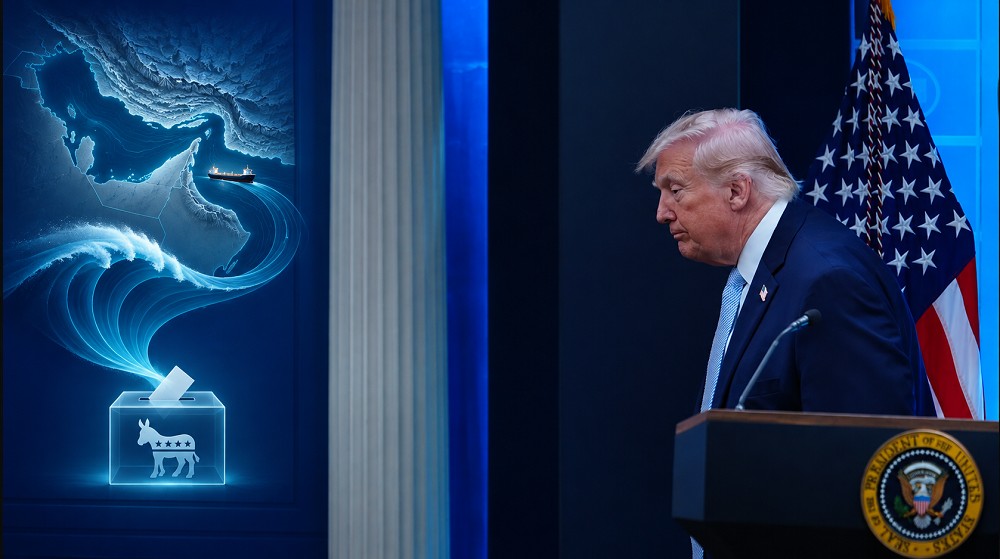
Two concerns that polls often measure separately converged in this election: foreign policy and the cost of living. For some voters, news from the Strait of Hormuz became relevant to daily life when filling a tank cost more. Meanwhile, the pressure from the conflict compounded economic dissatisfaction that had already been building. That gave Democrats a way to judge the administration against a promise that mattered to many households. Had life become more affordable under Trump?
How the War With Iran Reached American Gas Stations
Disruption to tanker traffic through Hormuz raised concerns about energy supplies. American consumers felt exposed to those risks even when the gasoline they purchased was refined from oil that had never passed through the strait. Buyers and refiners operate in an interconnected market. As access to some supplies becomes harder, competition for replacement cargoes increases. In turn, expectations that the disruption will persist can push prices higher in other markets as well.
For a household that depends on a car to get to work, fuel is an expense that is difficult to put off until next month. Businesses that depend on transport also face higher costs and may pass some of them on to customers. Consequently, the economic effects of the war with Iran can influence a voter who names rising prices as their main concern. This indirect channel helps explain why a conflict can carry electoral weight even when foreign policy ranks lower among voters' stated priorities.
For Trump, the issue was particularly personal because making life more affordable was central to his 2024 campaign. As the conflict continued, Republican candidates found that promise harder to defend. The White House could make a national security case for military action. In their districts, however, congressional candidates faced a more immediate question about when voters would feel the economic improvement they had expected. The longer the conflict lasted, the harder it became to give a convincing answer.
Why the War With Iran Became an Electoral Liability for Republicans
The AP Voter Poll found that roughly half of voters considered the cost of living and government corruption crucial to their congressional vote. A smaller share gave the war with Iran the same weight. Thus, Democrats drew support from several sources of discontent. At the same time, the survey does not isolate the portion of economic dissatisfaction attributable to the conflict. That would require separating the effects of fuel costs from tariffs and other pressures on household budgets.
Trump also encouraged supporters to vote as though his own name were on the ballot. That approach could mobilize the Republican base. However, it also gave opponents a way to cast their votes for Democrats as a check on the president. For Republican candidates who wanted to emphasize their local records, the national focus created an additional burden. They had to answer for decisions they had little power to make or reverse.
The blue wave changed control of Congress because Democrats also made gains in some areas that had leaned Republican. Even so, several mechanisms can produce a shift in an individual district, including voters changing parties, differences in turnout and the relative appeal of candidates. The national results cannot establish how much each mechanism mattered locally. The war with Iran therefore offers a stronger explanation for why Republicans struggled to defend the administration's record than for why any single seat changed hands.
What the Blue Wave Changes for Trump's Next Decision
With Democrats taking control of both chambers, the White House faces a Congress with more incentive to ask about the cost, objectives and expected duration of military operations. Budget scrutiny and hearings could increase the political cost of continuing the conflict. Their effect, however, will depend on what the incoming majority chooses to do and whether it can turn its objections into concrete action. The election changes the balance of power in Washington while leaving the timing of any settlement to future decisions.
Trump now faces two related demands. First, his administration must explain what additional military pressure can achieve. Second, it must show how it would prevent a repeat of the economic costs that hurt his party during the campaign. If negotiations bring a lasting reduction in disruption around Hormuz, the White House can make the case that diplomacy eased economic pressure. If operations expand, by contrast, the incoming Congress will have more room to question whether the expected result justifies the cost.
Before the vote, the administration could ask consumers to wait for the conflict to end before expecting relief in energy markets. After the loss of both chambers, however, that promise will face scrutiny from a majority elected amid widespread frustration over prices. This creates a more immediate problem for Trump than deciding how to present the next military or diplomatic move. Congress can ask the administration to explain, before committing more resources, what an achievable outcome would look like and when the public might see its benefits. The next decision on the war with Iran will therefore be judged against a domestic test as well as a strategic one. What result would justify costs that voters have already felt in their everyday lives?